
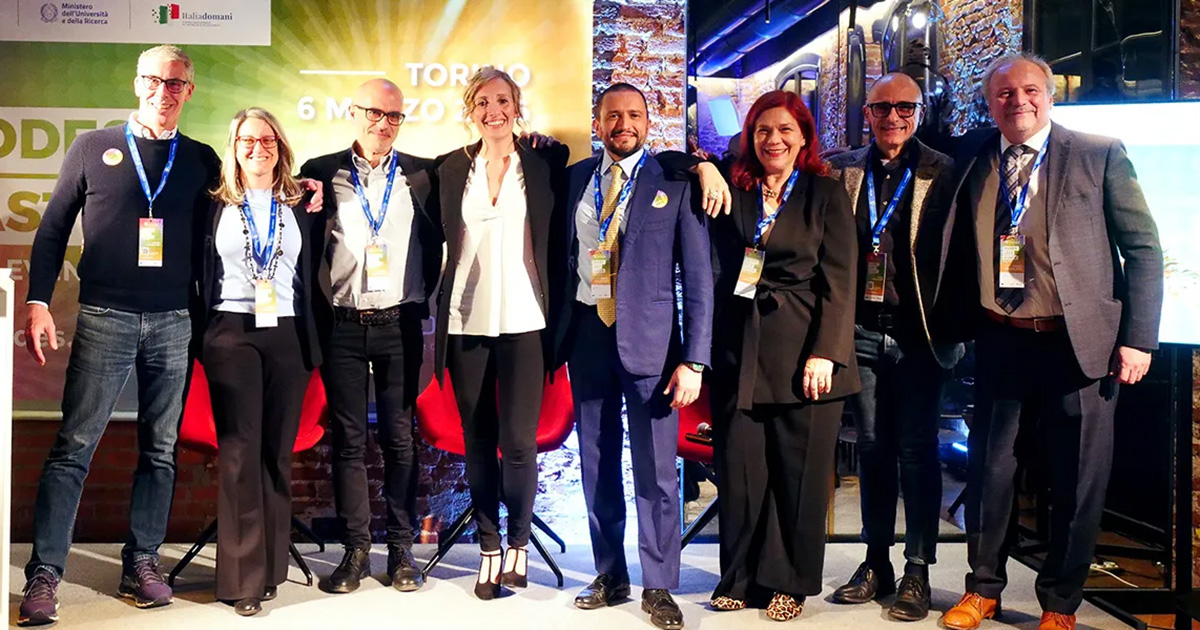
On March 6, 2026, in Turin, Italy, the NODES Ecosystem – Digital and Sustainable Northwest celebrated the conclusion of its 2022–2025 program with “NODES Last Dance”, an evening that brought together institutions, universities, businesses, start-ups, researchers, and stakeholders who have contributed to the project over the past few years.
The event took place at EDIT Space Torino, which was transformed for the occasion into a space for gathering and sharing, where participants could reflect on the work accomplished and acknowledge the value of the relationships forged over the course of three years of activity. This was a relatively brief yet intensely productive period, during which NODES fostered a multifaceted ecosystem of research, innovation, and training, involving universities, businesses, research centers, and local communities.
As evidence of the value generated, it is worth highlighting some of the results achieved: over 800 scientific publications resulting from research activities, along with 17 patents and industrial property rights, and the development of more than 50 demonstrators and prototypes within the flagship projects. At the same time, academic and industrial proofs of concept have fostered the emergence of new entrepreneurial initiatives and the development of technologies ready to compete in the market.
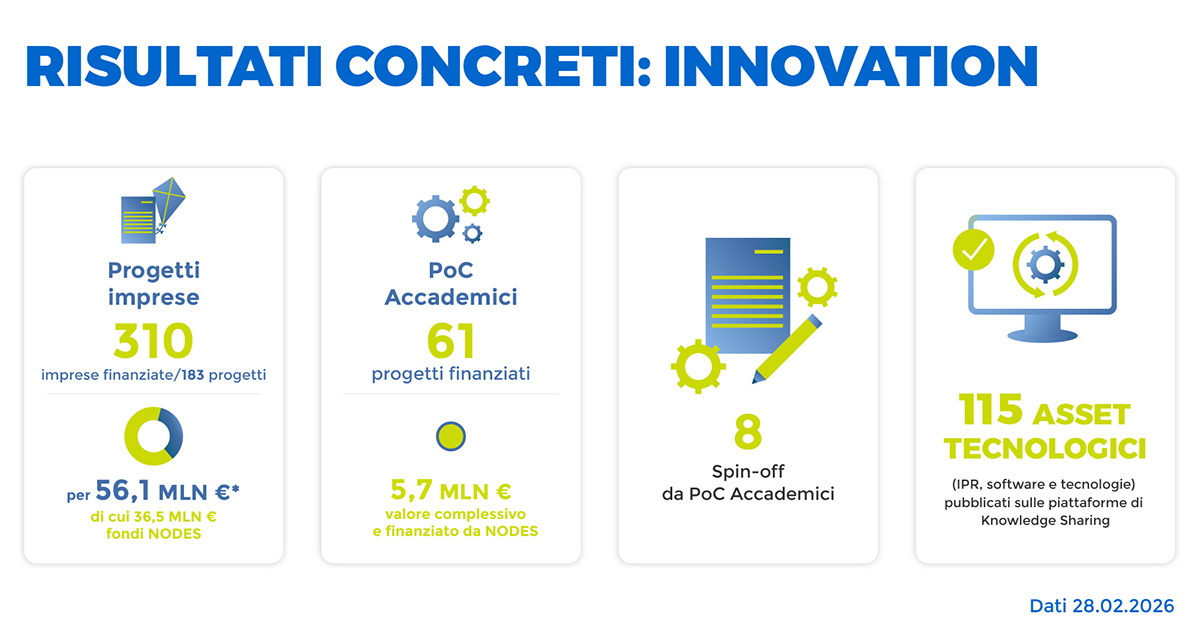
In terms of training activities, more than 200 training programs have engaged thousands of participants, while the Student Challenges have given hundreds of students the opportunity to tackle real-world problems posed by companies. Finally, through cascading calls for proposals, the Ecosystem has supported more than 300 companies in innovation projects, mobilizing over 54 million euros in public funds and private investments.
None of this would have been possible without the more than 1,200 people involved in the project activities, which reached over 370,000 participants through events, initiatives, and outreach programs.
Three years of work in one evening
NODES Last Dance thus provided an opportunity to showcase the results of the ecosystem’s efforts. The first part of the event, moderated by Filomena Greco of Il Sole 24 Ore, traced NODES’s journey through the voices of its key figures.
In his opening remarks, Stefano P. Corgnati, President of Hub NODES, highlighted the value of the work carried out over the past few years. “NODES has been a great ecosystem that has successfully utilized the resources made available to it in a timely manner,” he noted. “Funds that have generated value for those who participated and believed in the project. The universities have demonstrated their ability to manage complex programs and to do so collaboratively. Working together creates opportunities for everyone.”
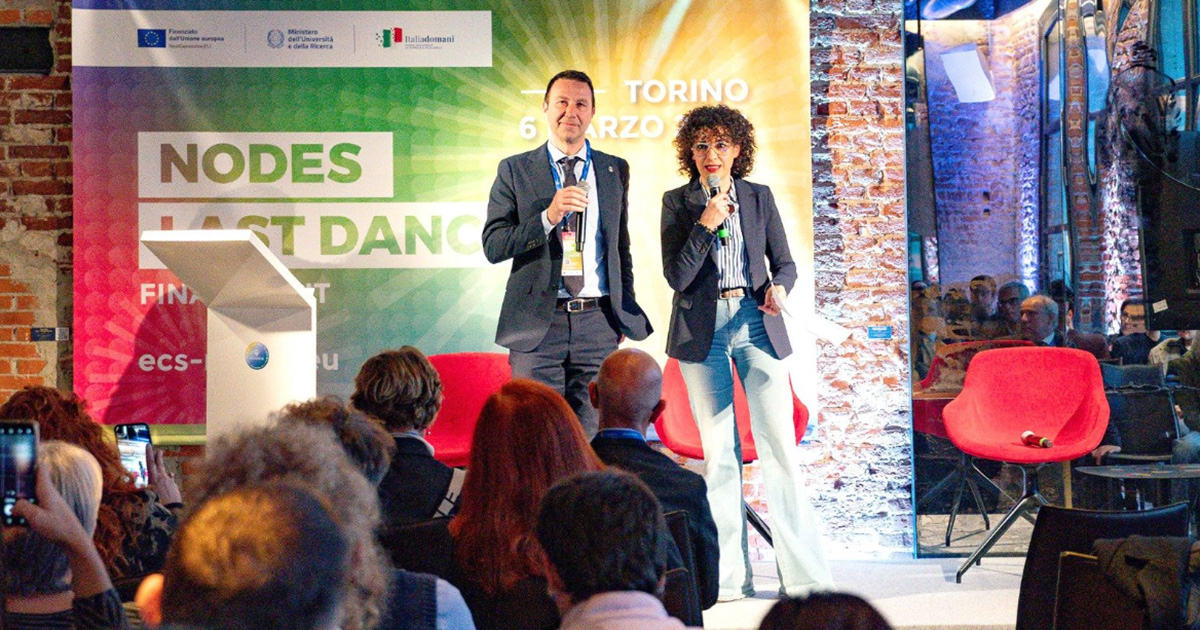
Next to speak was General Director Chiara L.G. Ferroni, who traced the origins and development of the Ecosystem. Three and a half years ago, NODES was primarily a project on paper: the idea of building a network capable of connecting universities, businesses, and local communities in the Northwest around seven major strategic areas related to the digital and ecological transition.
“We can say it has been a success story,” Ferroni noted. “We will likely never again see so many resources concentrated in a single program, but the challenge was to turn them into concrete results. Through research, we have managed to generate projects, expertise, and innovation.”
The experiences of the seven Spokes
The evening then continued with presentations by representatives of the seven thematic Spokes, who provided an overview of the activities carried out during the program.
Spoke 1, dedicated to aerospace and sustainable mobility, presented - along with Giuseppe Scellato, President of I3P and Coordinator of ESA BIC Turin - the results of the research and technology transfer activities carried out through the flagship projects Space4You, Electro, and H2Mobility, with the aim of strengthening industrial innovation in the sectors of the space economy, hydrogen, and electric mobility.
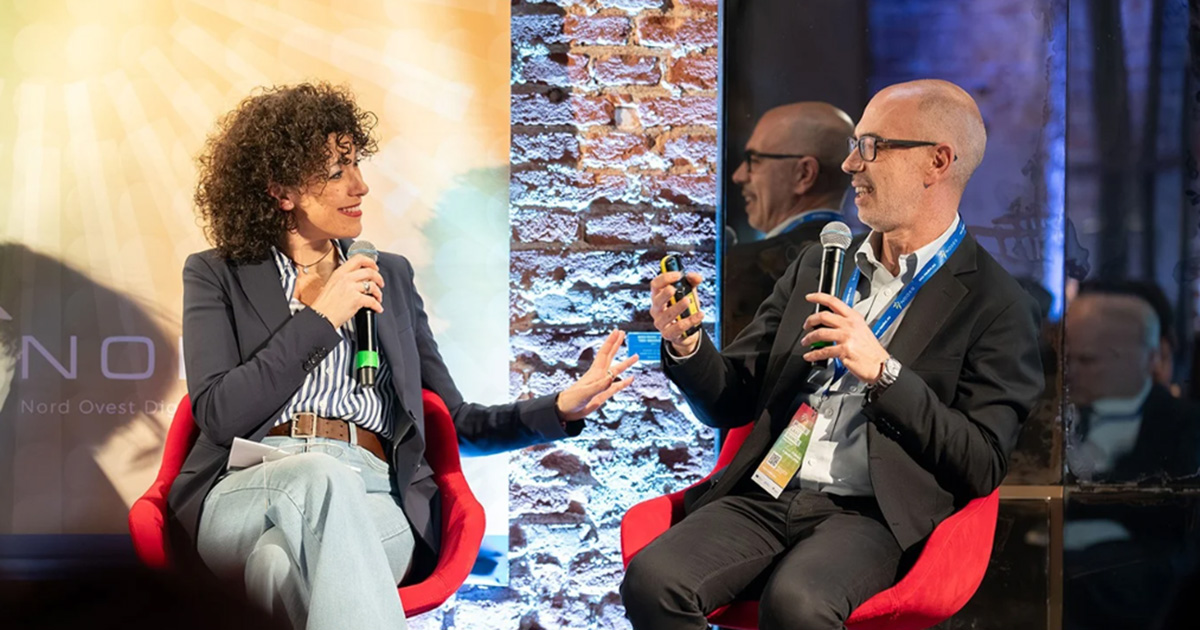
Edoardo Braccio, speaking on behalf of Spoke 2 - which focused on green technologies and sustainable industry - described the creation of an innovation community dedicated to the ecological transition, bringing together researchers, companies, and start-ups to address issues such as the circular economy, green chemistry, renewable energy, and environmental resource management.
For Spoke 3, dedicated to tourism and the cultural industry, Barbara Pozzo presented initiatives that combined legal research, sustainability, and digital innovation to promote the cultural and creative heritage of local areas, including the experimental Tourism Open-Ended Platform (TOEP) designed to develop new data-driven models for tourism offerings.
Marco Alderighi, speaking on behalf of Spoke 4 - which focused on the theme of digital and sustainable mountains - presented projects dedicated to developing technological solutions for mountain regions, including environmental monitoring systems, water resource management models, and digital tools designed to foster new forms of work and economic development in Alpine areas.
In the field of health and the silver economy, Marco Invernizzi, representing Spoke 5, presented research and innovation initiatives focused on developing technologies for regenerative medicine, advanced diagnostics, and digital health technologies, while also promoting training programs and technology transfer between universities, clinical centers, and businesses.
Spoke 6, focused on primary agribusiness, highlighted research and innovation initiatives in agricultural supply chains. Hermes Giberti discussed projects related to viticulture, the development of new crops, and the testing of more sustainable production models, with strong involvement from businesses and local communities.
Finally, Luisa Torri, representing Spoke 7 - which focuses on the secondary agro-industry - presented research on sustainable food production, the circular economy, and smart systems for food processing, developed through a collaborative model involving universities, businesses, and stakeholders in the agri-food sector.
Taken together, the presentations demonstrated how the NODES Ecosystem has successfully bridged different scientific fields and transformed research into tangible opportunities for businesses and local communities.
The connections within the ecosystem
In her closing remarks, the Director General noted that the most important value of the NODES initiative lies not only in its scientific results or the projects it has carried out. “The true value of NODES lies not only in the numbers or the innovations produced,” explained Ferroni. “It lies in the relationships that have been forged, in the trust built between people and institutions, and in the ability to work together.” She invited those present to look around and recognize the network of connections that has emerged over the years among universities, businesses, researchers, and local communities.
Following the public session, the evening continued with a networking session among partners and stakeholders, providing an opportunity to further discuss ongoing projects and future prospects. The event concluded with NODES Last Dance, the final social gathering that gave the evening its name: a symbolic way to celebrate the journey together. More than a conclusion, it was a passing of the torch: because programs may end, but the relationships built endure. As the motto of the NODES Ecosystem reminds us: "Where connections shape our future".


