
The innovative start-up CUS-GNC, incubated in I3P and in ESA BIC Turin, has entered a strategic collaboration with ExLabs, an aerospace company focused on deep-space infrastructure and missions beyond Low Earth Orbit (LEO), to support the next generation of autonomous space operations, including the Apophis mission.
At the core of this collaboration is Space Pilot by CUS-GNC, a software-defined Guidance, Navigation & Control (GNC) solution, designed to enable spacecraft to operate autonomously, reliably, and safely in complex and highly uncertain environments.
As missions move farther from Earth and communication delays increase, autonomy becomes mission-critical. Space Pilot by CUS-GNC is deployed, mission-ready software, built to provide onboard decision-making capabilities when ground intervention is limited or impossible.
A software-first approach to space autonomy
Space Pilot by CUS-GNC represents a paradigm shift from traditional GNC architectures, which are often tightly coupled to hardware and mission-specific configurations. Instead, it adopts a modular, scalable, and software-centric approach, making it adaptable across multiple spacecraft platforms and mission profiles — from Earth orbit to cislunar space and deep-space proximity operations.
“Collaborating with ExLabs allows us to apply Space Pilot by CUS-GNC in a truly demanding deep-space context”, said Simone Chesi, CEO of CUS-GNC. “Autonomy is no longer optional for these missions. Space Pilot by CUS-GNC was designed to give spacecraft the ability to manage complexity independently, while maintaining high levels of safety and performance.”
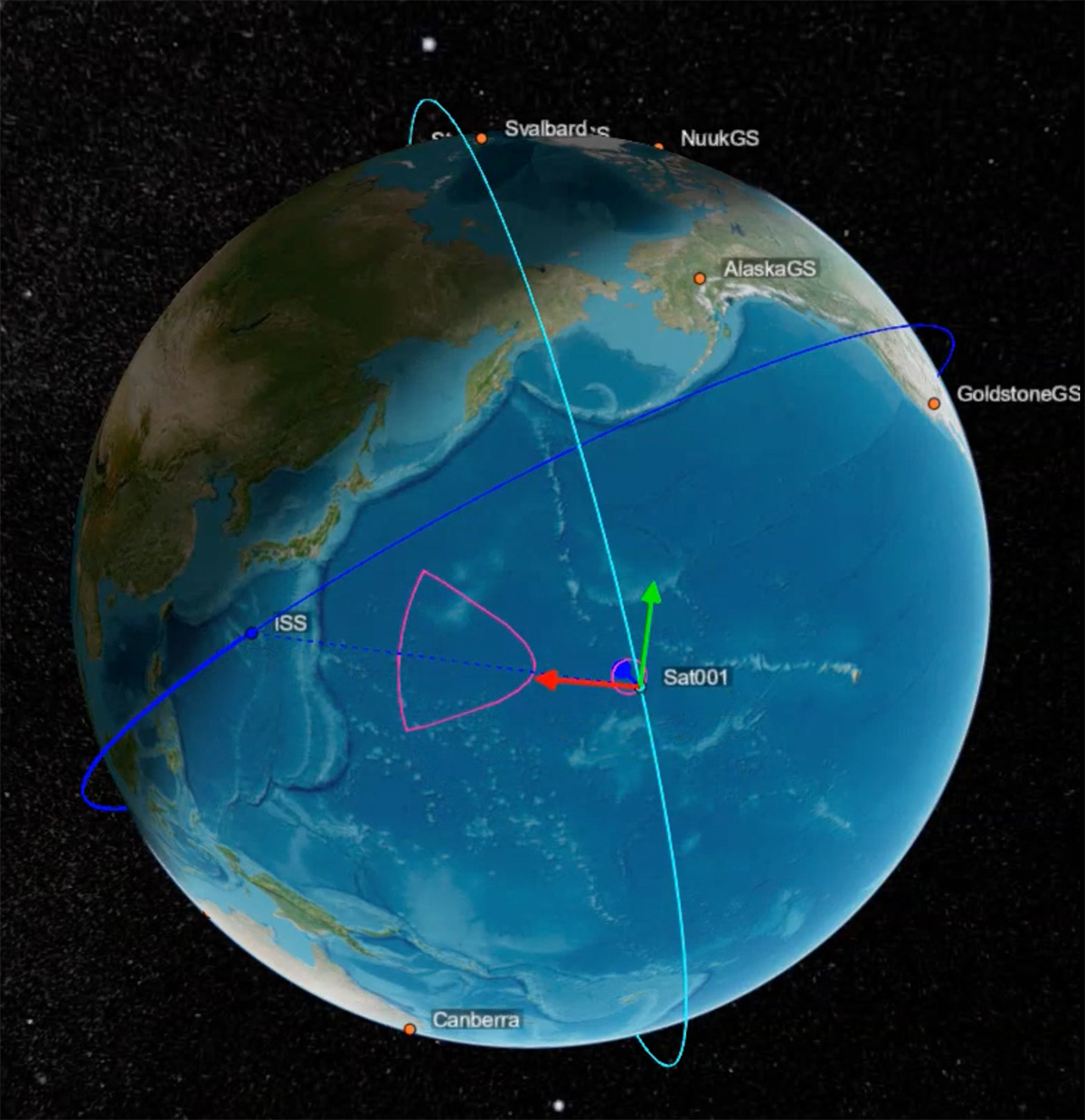
Since its earliest development stages, Space Pilot by CUS-GNC was conceived with autonomy as a core architectural principle, rather than an add-on feature. This design philosophy enables the software to scale in complexity while maintaining determinism, robustness, and transparency.
“Building autonomous GNC software means finding the right balance between adaptability and predictability”, explained Veronica Pellegrini, CTO of CUS-GNC. “With Space Pilot by CUS-GNC, we focused on creating an architecture that can evolve with the mission, while remaining verifiable, controllable, and trustworthy, qualities that are essential for deep-space operations.”
Engineering for uncertainty
Deep-space missions introduce dynamic environments, partial observability, and conditions that cannot be fully predicted during mission design.
Space Pilot by CUS-GNC addresses these challenges by integrating advanced estimation, guidance, and control algorithms with adaptive logic, ensuring robust performance even in the presence of degraded sensors or evolving mission scenarios.
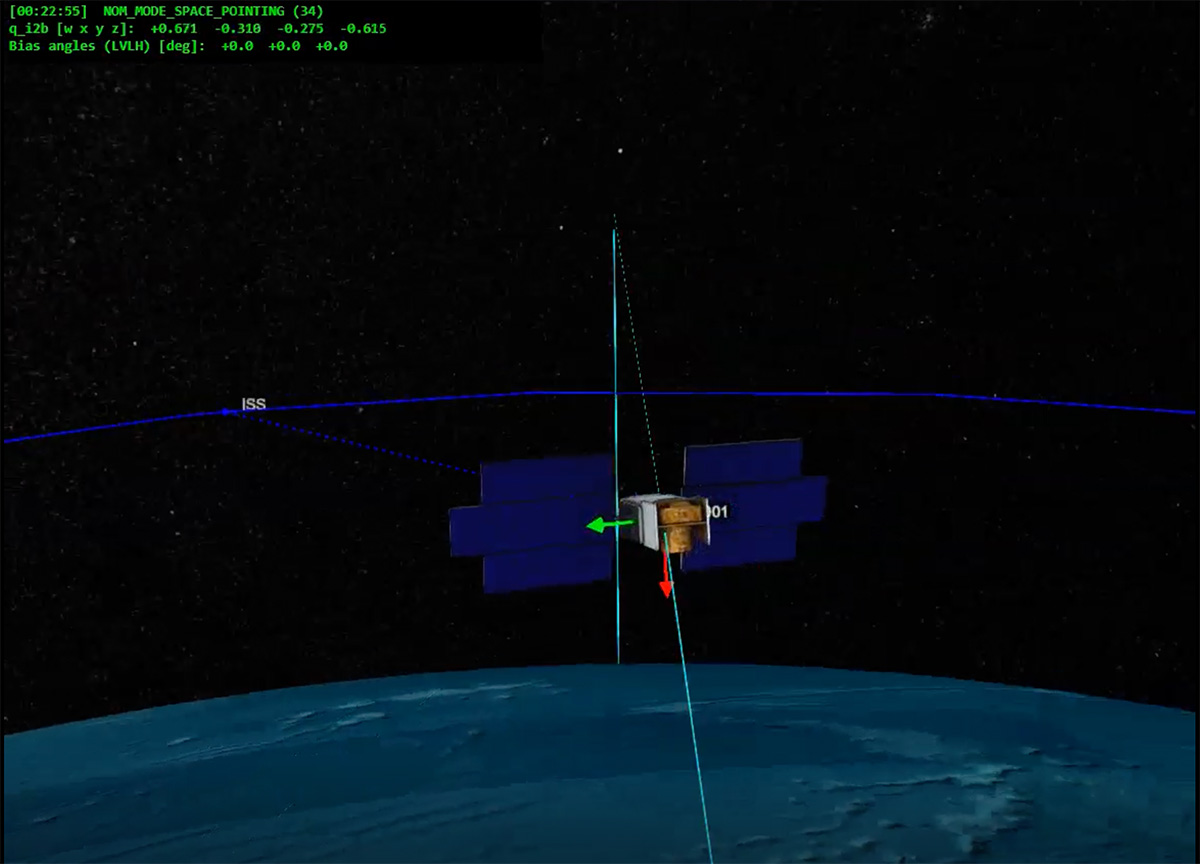
“From an engineering standpoint, the goal was to design software that remains reliable when assumptions break down”, explained Marco Bianchi, Chief Engineer at CUS-GNC. “Space Pilot by CUS-GNC is built to operate under uncertainty, whether it comes from sensor limitations, navigation constraints, or changes in the mission profile. This is essential for proximity operations around bodies such as Apophis.”
Supporting the Apophis mission
The collaboration with ExLabs on the Apophis mission provides a unique opportunity to validate the start-up's solution in a real deep-space environment.
During the asteroid’s close approach to Earth, spacecraft operations will require exceptional precision, resilience, and onboard autonomy. For CUS-GNC, Apophis represents both a scientific opportunity and a major technological milestone.
“Apophis is an ideal proving ground”, Chesi added. “It allows us to demonstrate that autonomous software like Space Pilot by CUS-GNC can be trusted during critical mission phases, paving the way for future exploration and planetary defense missions.”
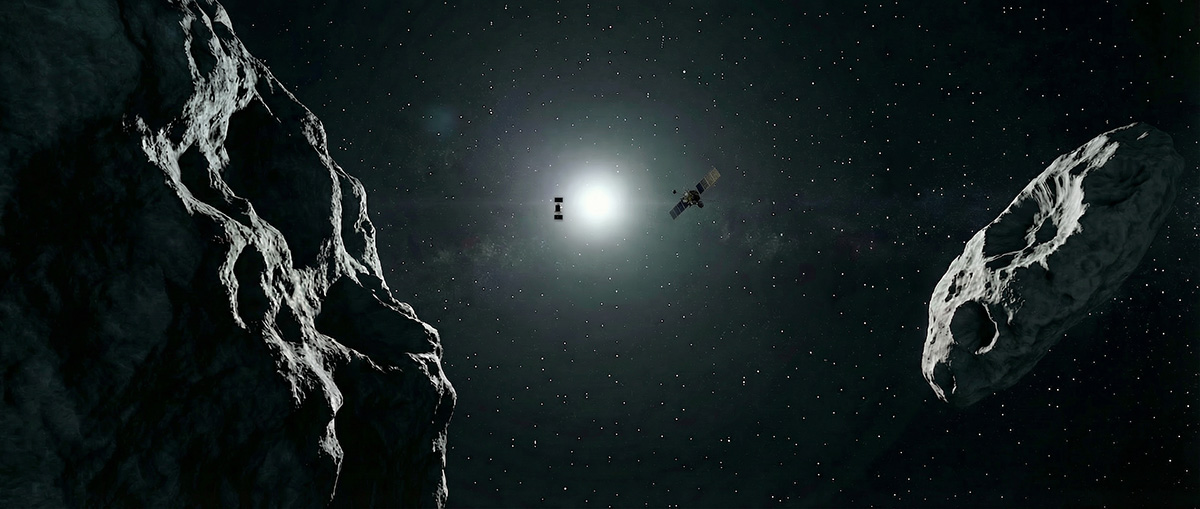
By combining ExLabs’ expertise in deep-space platforms with Space Pilot by CUS-GNC, the collaboration contributes to a broader transformation in how space missions are designed and operated, shifting toward adaptive, autonomous, software-driven systems.
“Autonomy is the foundation of future space missions”, Bianchi concluded. “With Space Pilot by CUS-GNC, our goal is to deliver a reliable, flight-ready software solution that mission designers can trust — today and for the missions yet to come.”


