
With the introduction at the end of 2025 of new guidelines on artificial intelligence (AI) applied to prevention, Italy strengthened its role on the European stage in the fight against breast cancer, defining an advanced regulatory framework for technological integration in care pathways.
On February 2026, the Italian Mammography Screening Group (GISMa) and Italian deep-tech company Health Triage announced the launch of an important project aimed at adding scientific evidence to the use of AI in population screening programmes through a prospective multicentre clinical study.
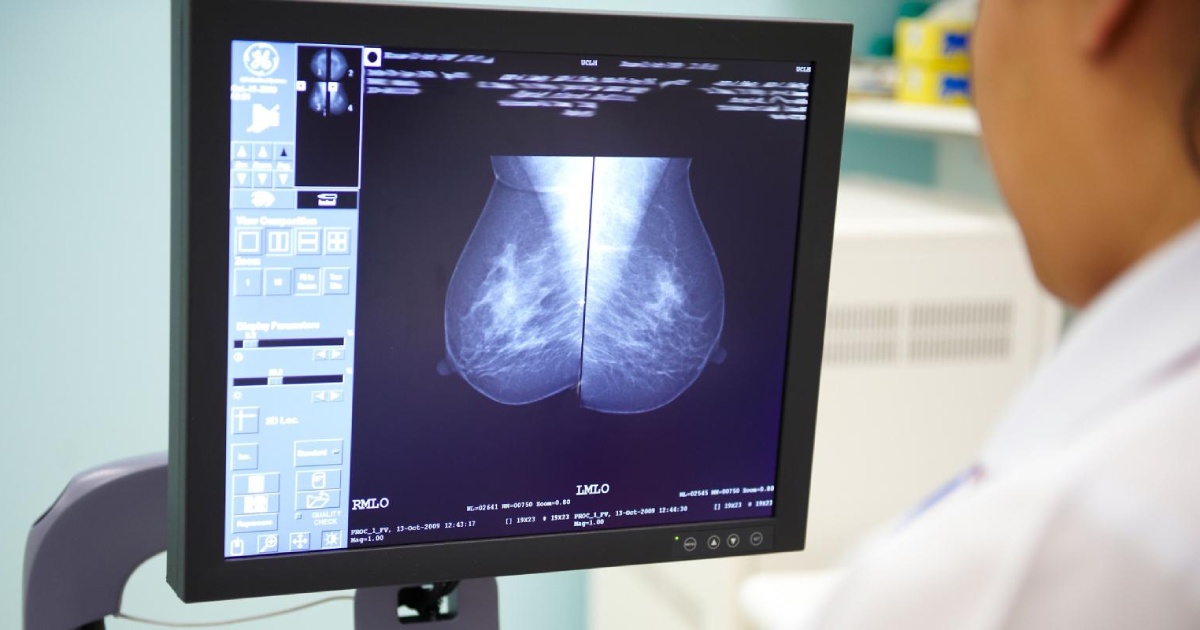
International literature suggests that artificial intelligence can significantly contribute to improving early detection of breast cancers by supporting radiologists in highlighting suspicious areas on mammograms. GISMa and Health Triage intend to take a further step forward and validate a reporting approach to be adopted in national screening programmes in which mammograms are triaged using AI.
The innovative venture in medical diagnostics
Founded in 2020 by Raffaele Petrone and Davide Dettori, Health Triage is based in Turin - in which the start-up successfully completed an incubation path in I3P, the Innovative Companies Incubator of Politecnico di Torino - and Pozzuoli (Naples). In May 2025, the young company announced the successful closing of a €5 million investment from the ENEA Tech and Biomedical Foundation.
The use of Health Triage digital systems in healthcare allows for the complete innovation of diagnostic processes with the aim of supporting medical staff and healthcare facilities with technological tools capable of increasing quality, precision medicine, and efficiency. Current research activities mainly concern the development of new automatic diagnosis technologies in the field of oncology, with a particular focus on the prevention and diagnosis of prostate cancer.
Health Triage is controlled by Fin Posillipo S.p.A., which owns over thirty companies based in Italy and Spain, serving Europe, North Africa, the Middle East, Latin America, the Far East, and Oceania. The group carries out research, development, and marketing activities in the health sector through subsidiaries, with a turnover of €800 million and more than 800 employees, offering direct support to clinical research organizations for clinical analyses, research projects, scientific tests, and preparatory activities for the launch of new products.
The BREAST.AI study
Launched by Health Triage with a cohort of 75,000 women, BREAST.AI is one of the largest Italian/European studies ever conducted using a prospective randomised design in breast imaging diagnostics.
Unlike other international experiences, radiologists will work in a “blinded” mode (without knowing the score assigned by the AI): a methodological choice that strengthens the robustness and impartiality of the results, ensuring an unbiased assessment. The study therefore aims to confirm the highest diagnostic safety while optimising time and human resources.
The BREAST.AI study uses the BreastNegative software to analyse mammograms and determine their level of suspicion. Under the protocol, exams classified as “negative” by the algorithm are directed to a single human reading, while the remaining cases are read by two radiologists, as is standard in screening.
This approach could reduce radiologists’ workload, allowing them to focus on more complex cases, or support an expansion of screening programme coverage. In the project, GISMa will act as an independent scientific guarantor, verifying methodological robustness, statistical analysis, and compliance with international Good Clinical Practice (GCP) standards.
The future of the project
“This study represents a crucial opportunity to rigorously assess the integration of artificial intelligence into screening programmes”, explained Francesca Caumo, Vice President of GISMa. “Our goal is to validate models that fully respect the principles of safety, appropriateness and quality that have always guided GISMa, ensuring that technological innovation is always in the service of women’s health and the efficiency of the National Health Service.”
“This is a decisive step to make artificial intelligence a truly useful tool and, although it is already validated in clinical practice, our goal is to gather further scientific evidence”, said Davide Dettori, CEO of Health Triage. “Our vision is clear: the goal is not to replace the physician, but to support them with advanced technologies that enhance their work. If results meet our expectations, we will finally be able to expand screening programmes, potentially extending them also to younger women thanks to the efficient use of the same human and technological resources currently available. In this perspective, the real challenge will be strengthening invitation programmes, to bring prevention to an ever-greater number of women, with particular attention to all Italian regions.”
With the entry into force of the new Guidelines of the Italian National Institute of Health (ISS), which for the first time recommend the use of AI as a triage tool to optimise screening programmes, the collaboration between GISMa and Health Triage is further reinforced: a strategic partnership that will see both parties engaged in validating the BREAST.AI study and designing new prevention models that are personalised, efficient and grounded in strong scientific evidence.


