
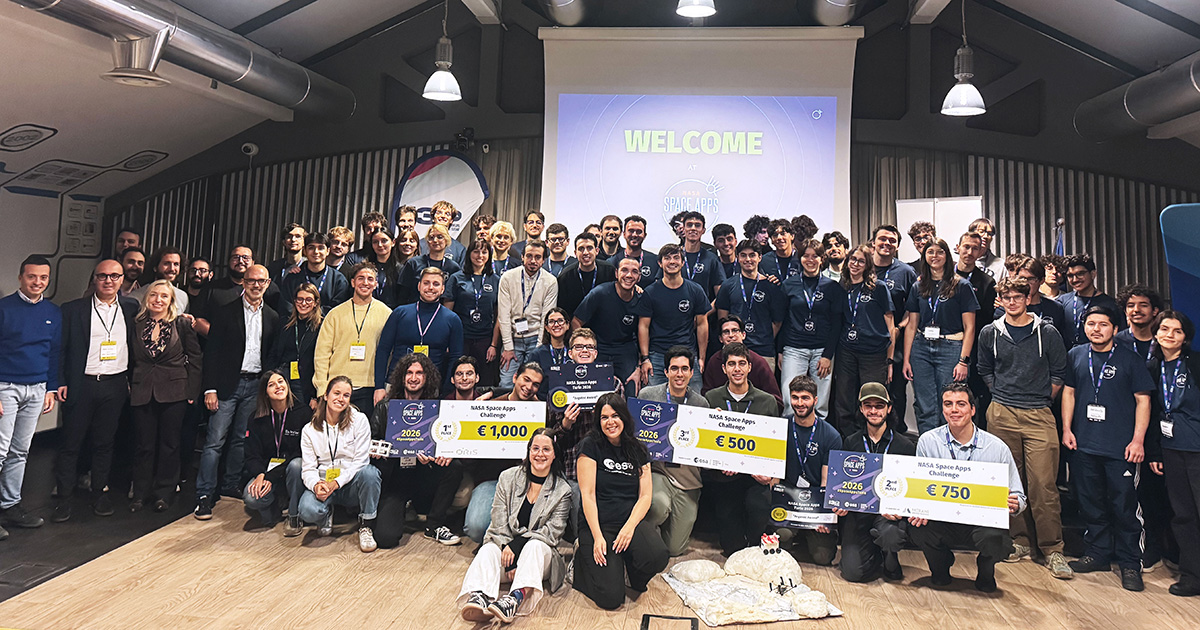
Originally launched in 2012, the NASA Space Apps Challenge is the world’s largest annual hackathon dedicated to space and science, and in its 2025 edition it achieved its highest-ever participation figures: more than 114,000 people gathered at 551 venues across 167 countries worldwide to tackle one of the challenges set by NASA, develop projects based on real data from leading space agencies, and present them to local judging panels, with the chance to progress to the international finals.
The 2026 edition of the initiative, themed ‘The Next Frontier’, took place over the weekend of Saturday 14 and Sunday 15 November as a global simultaneous event, hosted by hundreds of local venues across five continents. In Italy, one of the three cities to host the hackathon was Turin, alongside Milan and Rome: enthusiasts of space exploration and aspiring entrepreneurs in the Space Economy had the opportunity to take on the challenge at I3P, the Innovative Companies Incubator of Politecnico di Torino, which organised the tenth local edition of the hackathon in collaboration with the ESA BIC Turin incubation program.
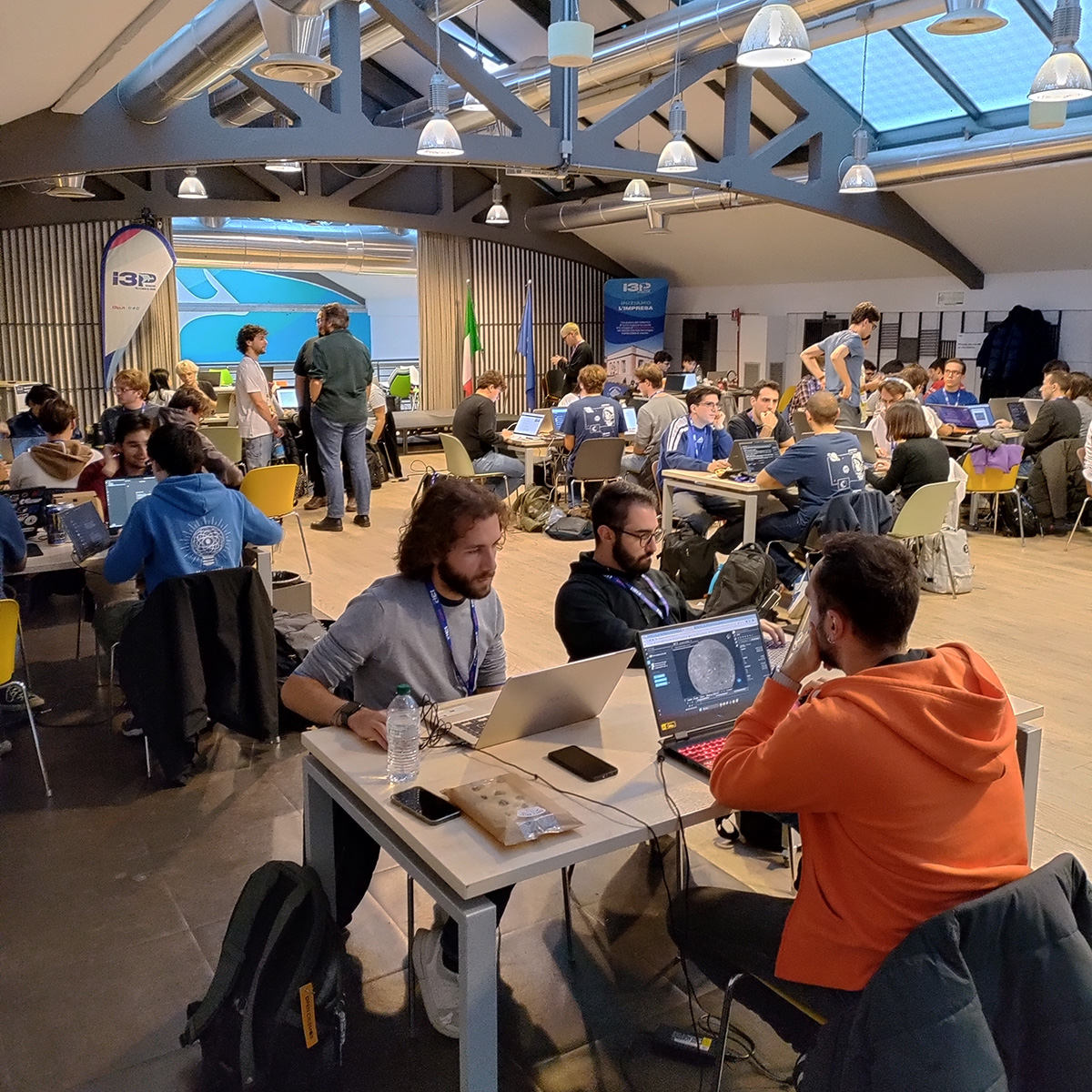
The Turin hackathon was supported by a wide range of sponsors and partners, including the innovative start-ups ORiS, Kurs Orbital and Theia Sense, the law firm Merani Amministrativisti, the space companies Argotec and Thales Alenia Space, the organisation Women In Aerospace Europe (WIA-E) through its Turin network, and the Center for Near Space run by the Italian Institute for the Future (IIF). The initiative’s international collaborations included partnerships with the European Space Agency (ESA) and the Italian Space Agency (ASI), with which I3P has been working for years to support the creation and growth of start-ups in the space sector.
The initiative, which this year offered a total of 14 challenges to choose from, was joined in Turin by 67 participants from many different countries and with varied educational backgrounds, who brought I3P's Agorà Hall to life with their inventiveness, passion and resourcefulness. The local hackathon officially began at 4.00 pm on Saturday and continued non-stop for 24 hours, including through the night, until Sunday afternoon, when the projects were handed in to the local organisers, 17 solutions were pitched to the judging panel, and the awards ceremony was held for the most promising teams, who may possibly go on to become start-up founders in the future.
The winning teams at Space Apps Turin 2026
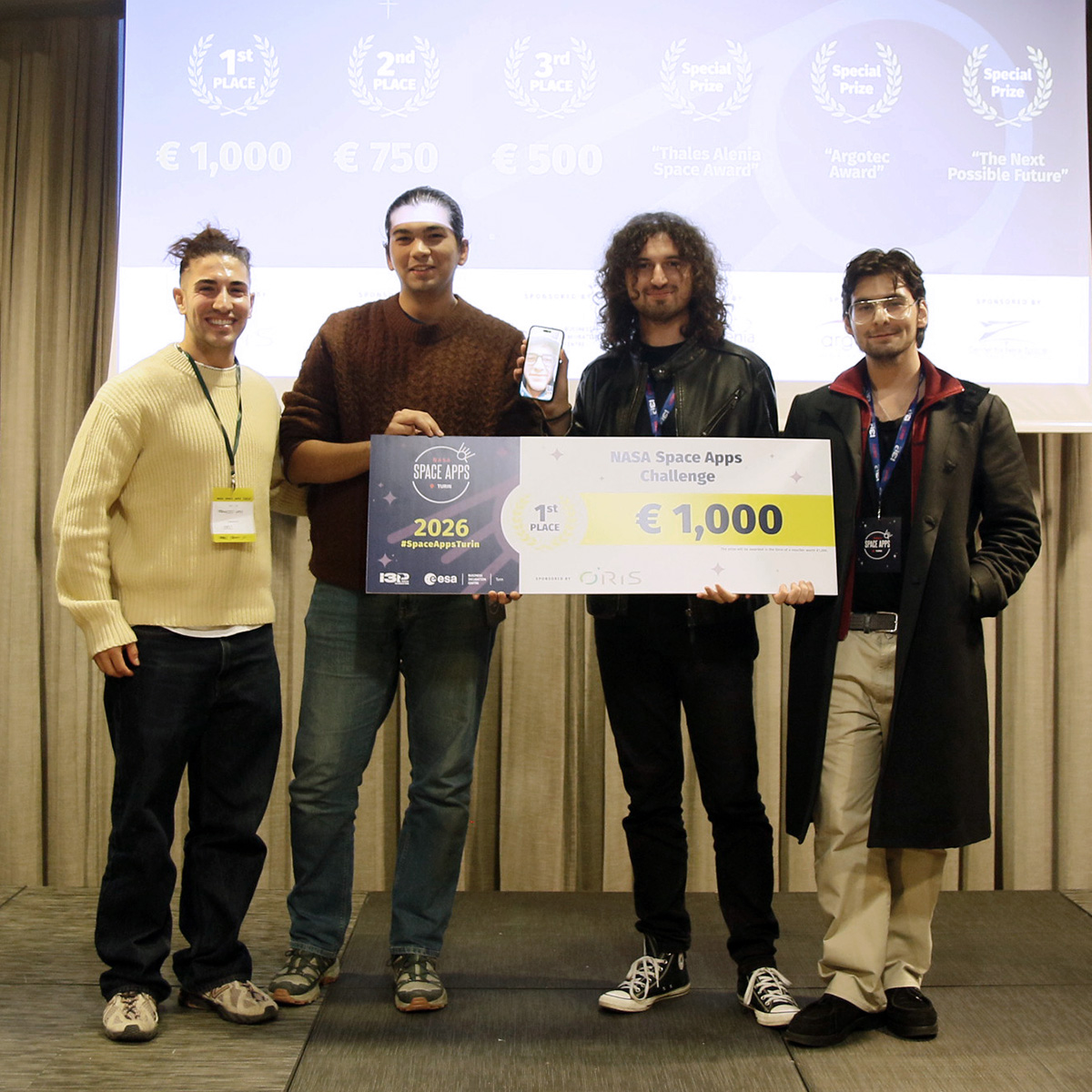
The overall first prize at the local hackathon in Turin was won by the team Project Ceres, comprising four members: Lorenzo Alexandru Adam, Arda Alici, Eren Gurel and Daniele Toniolo. The group chose to tackle the challenge entitled “Field Shift: Adapting Farms with NASA Data”, which involved creating a decision-support tool for farmers able to utilise a variety of data - including NASA’s ground-based observations, local soil information and crop characteristics - to help explore crop rotation strategies capable of enhancing soil health and adapting farms to changing climatic conditions.
The team therefore developed a dedicated cloud-native platform, Ceres, designed for data analysis, visualisation and algorithmic forecasting, which draws data from NASA’s open-source APIs, local cadastral data from public authorities and bespoke hardware for ground-based surveys. The technical merit of the project, presented to the local jury during the pitch sessions on Sunday afternoon, earned the Project Ceres team the first prize of €1,000, sponsored by the innovative start-up ORiS, alumni of I3P and ESA BIC Turin.
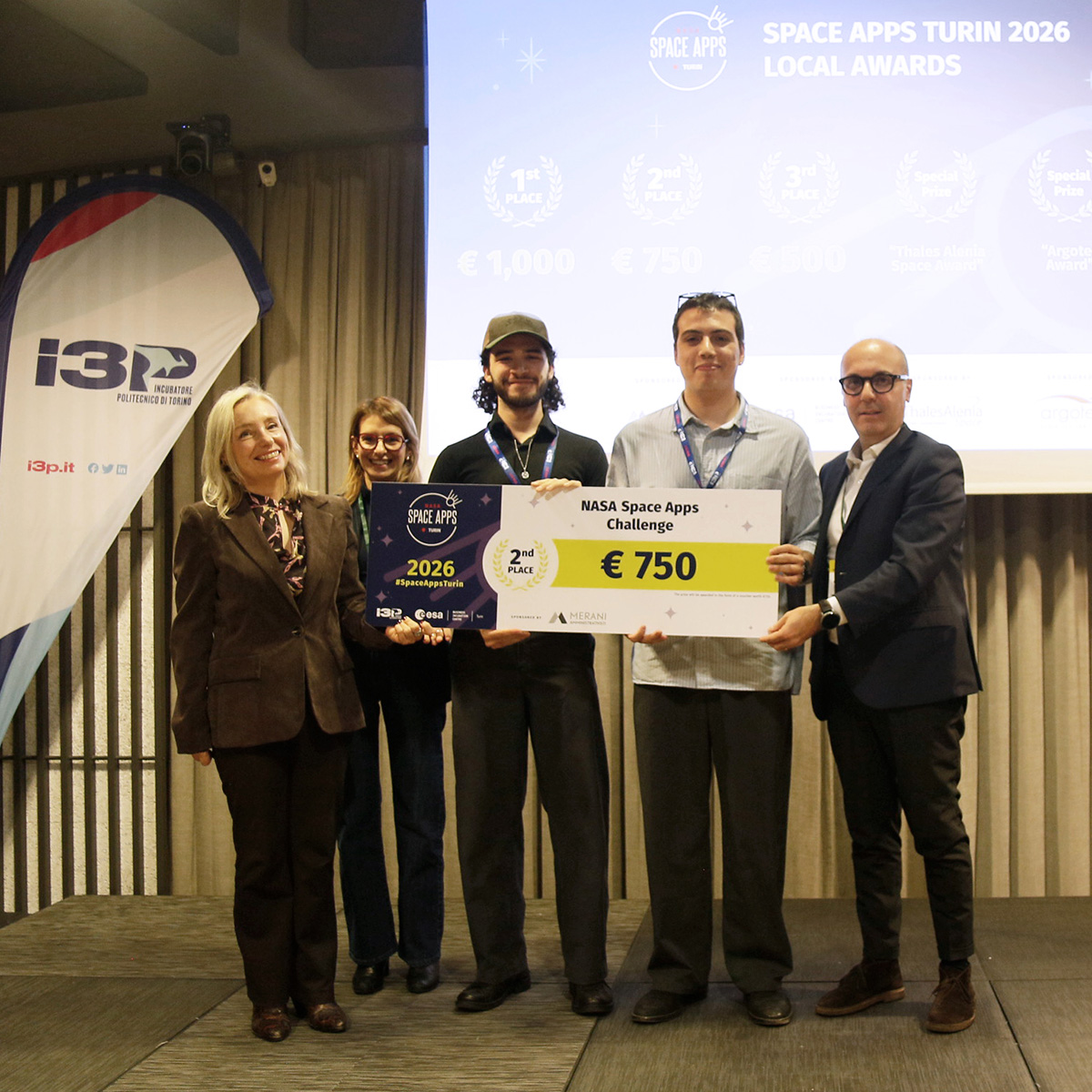
Second place on the podium went to Mate’s End, a team composed of Ismet Kaan Yilmaz and Kaan Yilmaz, two Space Apps Turin veterans who were already among the winners of the 2024 hackathon and awarded in 2025. This year, their project was developed in response to the challenge ‘Flame in Freefall: SI-Powered Fire Safety Insights from Microgravity Combustion Data’, which focused on creating an interactive dashboard, based on web-based data and the use of AI, for fire safety in human space exploration.
The Mate’s End team has therefore developed FIREFALL, a network of AI agents and human users who collaborate to carry out joint assessments of the fire safety of spacecraft. The AI agents communicate directly via an agent-to-agent (A2A) system, carry out fire simulations on their respective digital systems and compare their results; when they require input on a decision, the matter is referred to a human manager, who then formalises the assessments and arranges for the technicians to carry out the actual laboratory tests. Thanks to this project, the team won the second prize of €750, sponsored by the law firm Merani Amministrativisti.
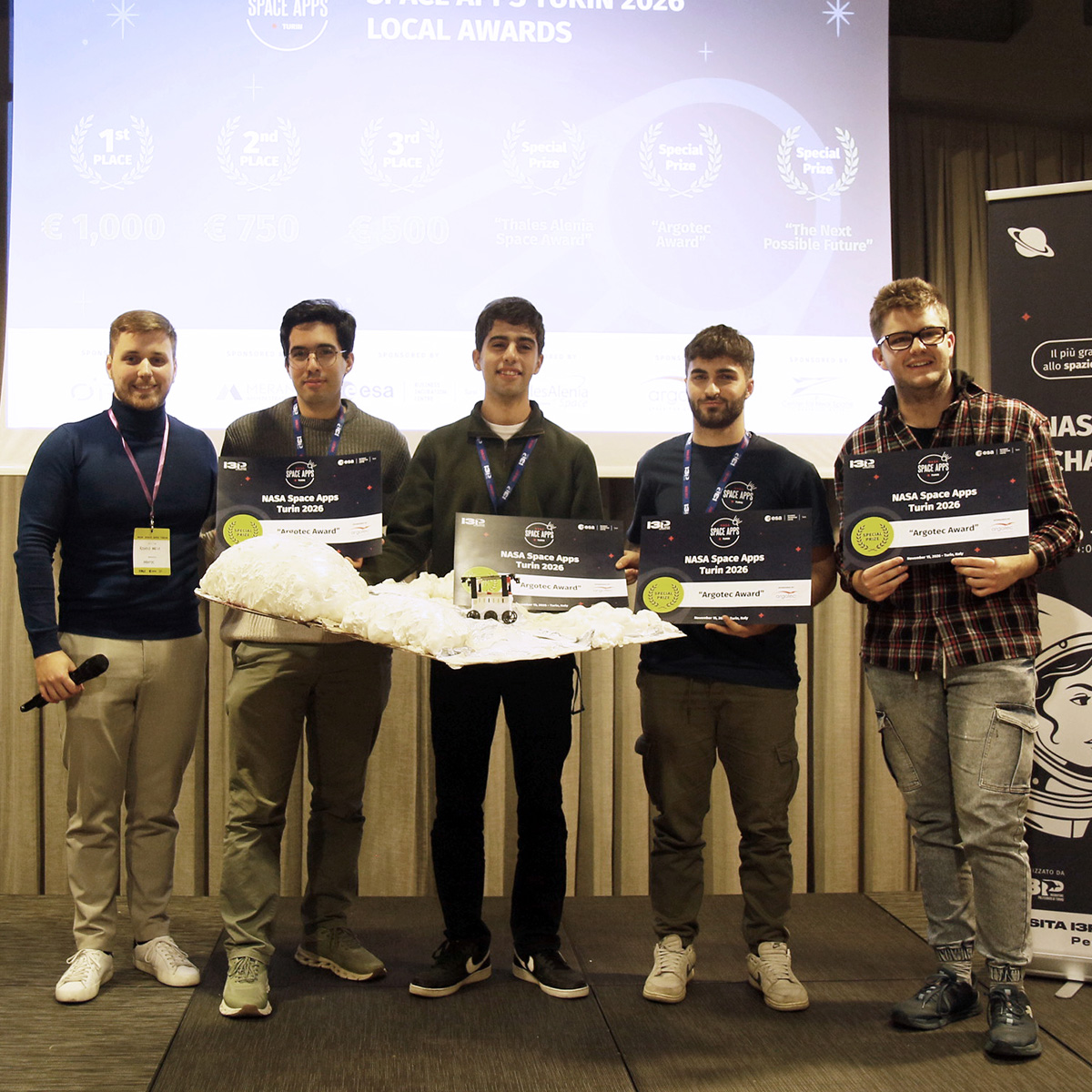
The third prize, worth €500 and sponsored by ESA BIC Turin, was awarded to The Moonions, the team composed by Alessio Cammarata, Ali Emre Senel, Alp Mete Senel and Teodor Tomov. The team chose the “Lunar Landing Site Navigator” challenge and developed the Plan Banana project, which aims to support lunar missions during the crucial phase when they must decide where and when to land, and what to do if the chosen location proves to be unsafe during descent.
More than half of all manned lunar landing attempts to date have failed, often due to navigation problems: the plan devised by the team involves training a neural network using NASA topographical data and four million simulated landings near the lunar south pole, as well as physical tests of the environmental context. The four members of The Moonions have also built a 3D-printed prototype lander, equipped with a camera capable of transmitting live data, and have chosen to make the landing planner open source for European researchers.
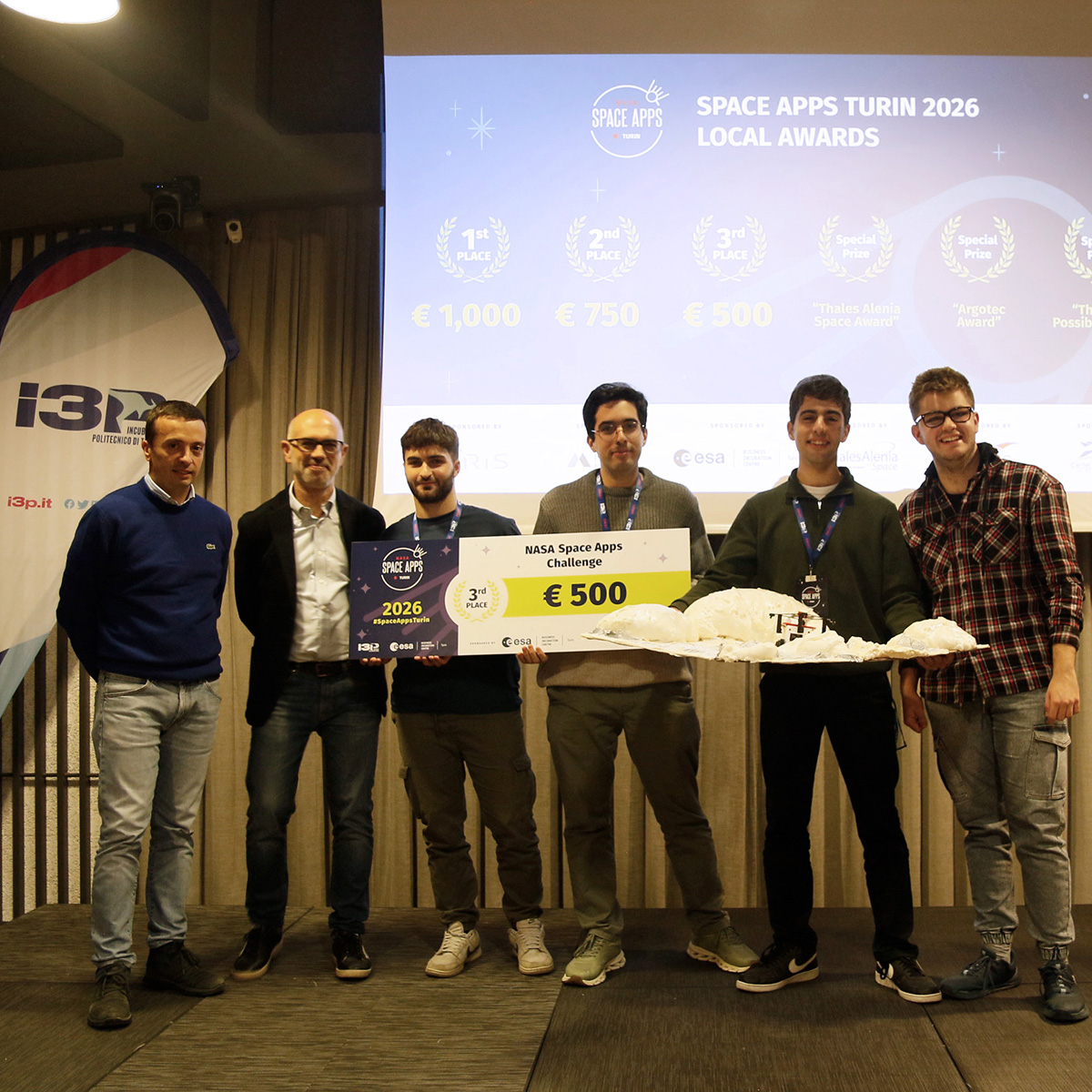
Thanks to its outstanding features, The Moonions’ project also won the special prize “Argotec Award”, sponsored by Argotec. The prize consists of an exclusive experience: a guided tour of the SpacePark in San Mauro Torinese (Turin), an aerospace technology hub where satellites are designed and built, and from where operations are carried out once they have reached orbit. A journey behind the scenes of space innovation, to discover how a mission comes to life: from the construction of the satellite to its control hundreds of kilometres from Earth.
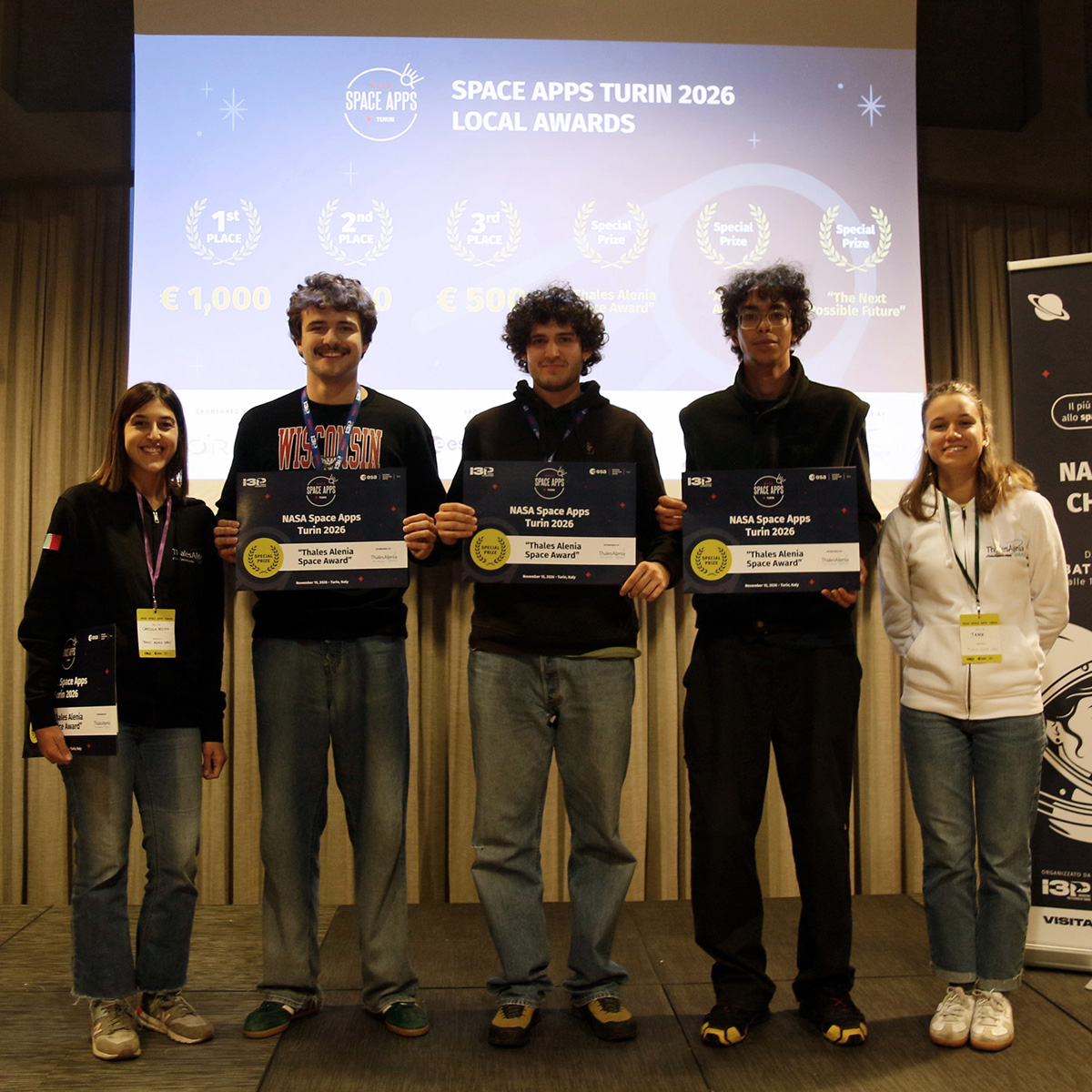
The FVG Station team, comprising the three members Timoteo Costantini Scala, Edoardo Panella and Rocco Luciano Verona, was awarded the special prize “Thales Alenia Space Award”, presented by Thales Alenia Space. The team responded to the challenge “dentify Earth Locations that Analog the Permanent Moon Base Locations and Mars” with the POLENTA project, an acronym for Planetary Outcrop & Landing Environment Nearby Testbed Assistant.
At the heart of the project is a digital tool that shows companies and space agencies where on Earth they can best test hardware intended for the Moon or Mars, by comparing data on Earth’s terrain with that of the final destination’s surface and generating, in just a few minutes, lists of the most suitable locations worldwide. The award presented by Thales Alenia Space will consist of an exclusive visit to the company’s Turin site, one of the few places in the world where crew modules for astronauts are built, during which visitors will be able to see at first hand just how close are the city’s ties to space.
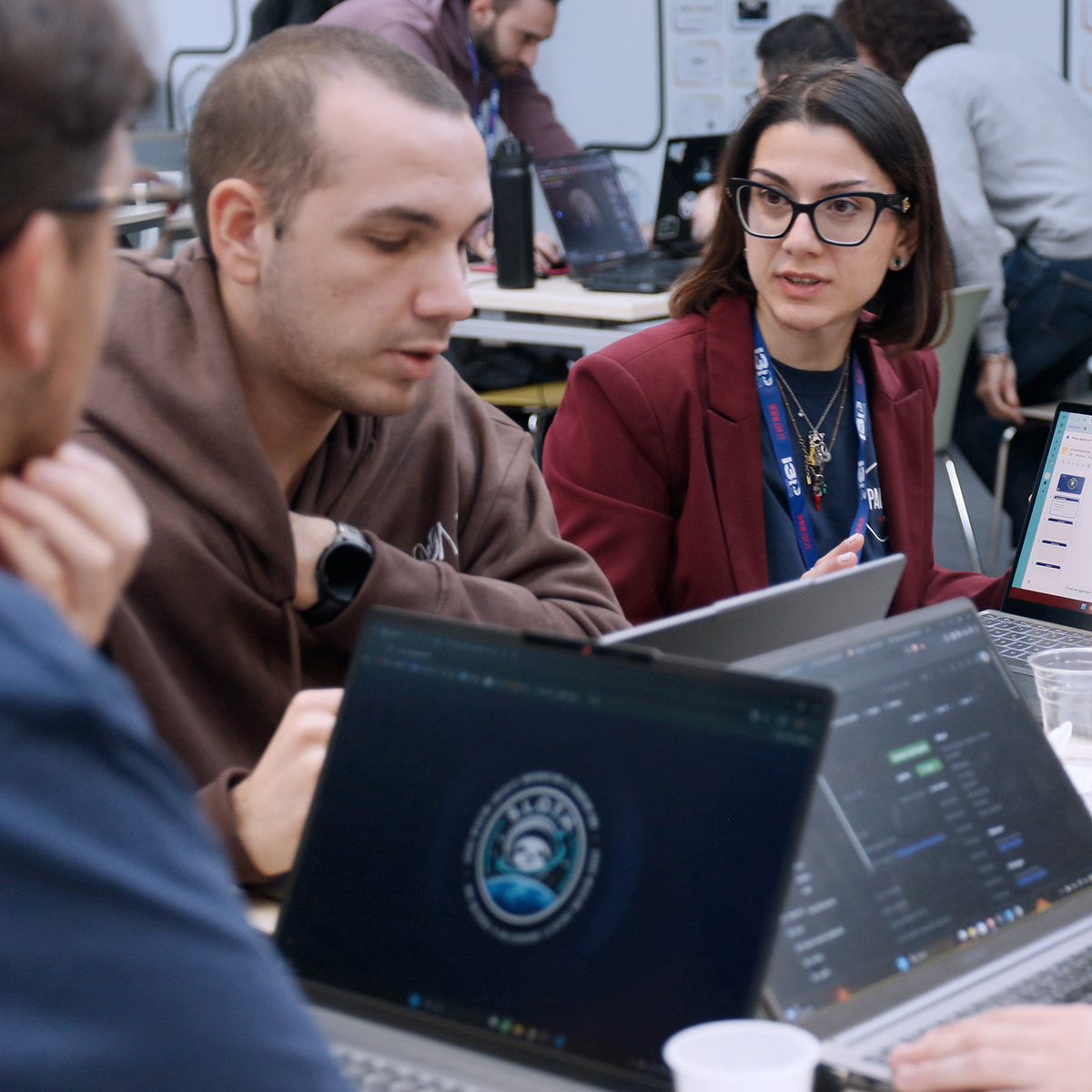
The special prize “The Next Possible Future”, awarded by the Centre for Near Space, was won by team 3DC, comprising Arianna Amoia, Emanuel Chirico, Fabrizio D’Errico, Matteo D’Onofrio and Aniello De Girolamo Del Mauro. In response to the challenge “Create Health Monitoring Software for Astronauts on Space Missions”, the team developed S.L.O.T.H., which stands for Space missions Lucidity Observation & Tracking Hub.
The project consists of an AI assistant and a dashboard to support space missions, designed to help astronauts communicate and monitor their daily wellbeing. The prototype combines voice or text alerts relating to sleep, fatigue and physical wellbeing with simulated sensor readings and optional webcam observations of eyelid closure. Once the astronaut has confirmed the information to be shared, S.L.O.T.H. generates a personalised report for ground control, distinguishing between reported experiences, measurements, discrepancies and uncertainties.
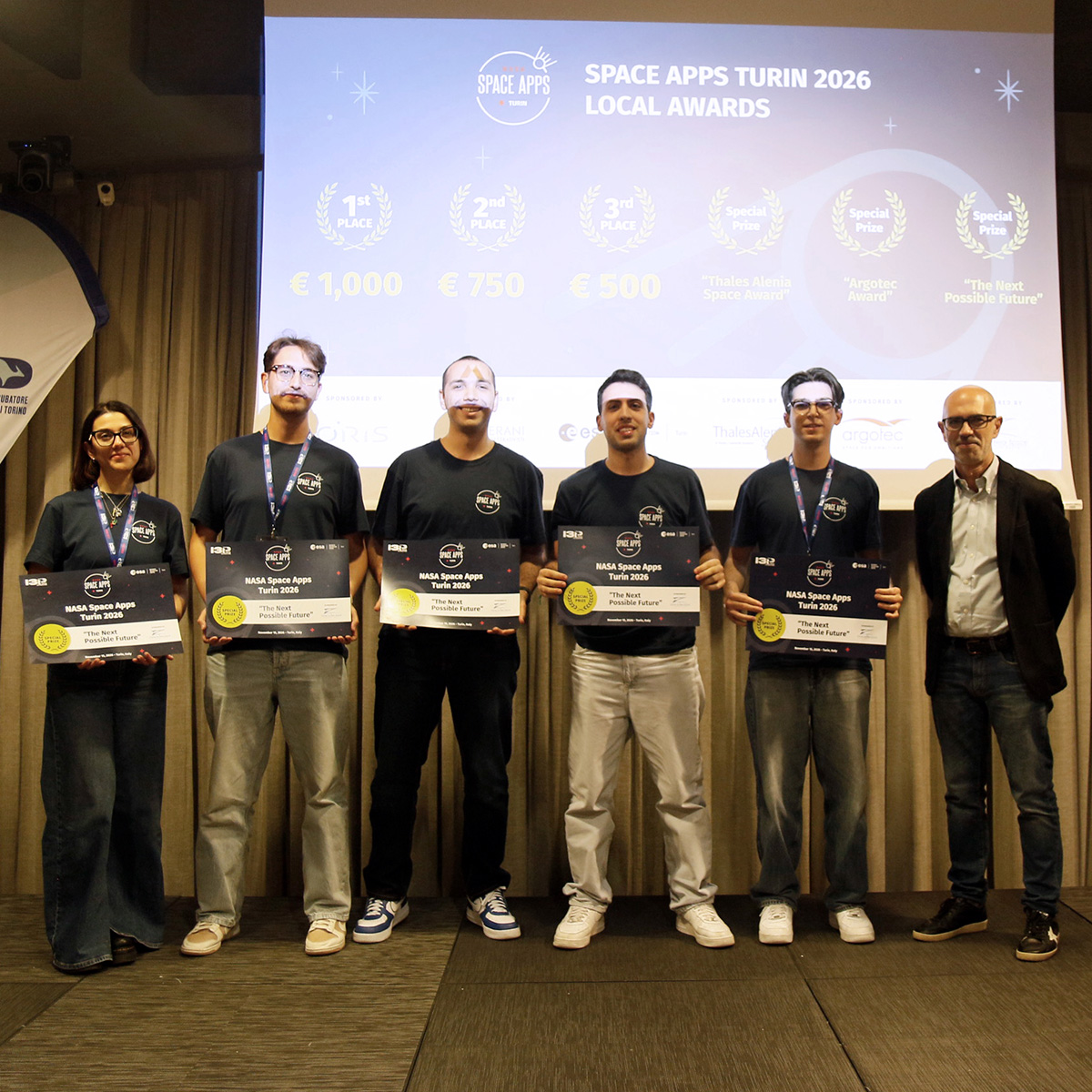
At the end of the event, Giuseppe Scellato, President of I3P and Coordinator of ESA BIC Turin, thanked all the participants, sponsors, mentors and judges of the local hackathon for making it possible, expressing his hope that the best teams from Turin would continue their journey in the international competition and that the brightest talents would return to the Incubator to propose new technology-based business projects to be developed together as innovative start-ups.


